

Alessandro Mattei luthier
My Journey in the World of Violin Making
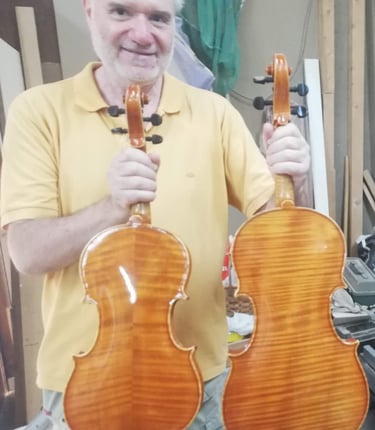
Alessandro Mattei, Livorno 1968.
At the age of 15 he began working in a carpentry workshop and became fascinated by wood and its various methods of working. In the 1990s he developed a passion for violin making, frequently traveling to Cremona in an effort to acquire knowledge about the construction of bowed string instruments.
After a few years, a fundamental encounter was the one with Maestro Enrico Giovannini, a native of Livorno and concertmaster of the Sanremo Orchestra, who encouraged him to pursue the profession of luthier, offering him countless pieces of advice and giving him the opportunity to see up close and handle his beautiful collection of instruments.
Giovannini later introduced him to his friend Maestro Carlo Vettori, who had also moved to Livorno. Vettori likewise gave him the opportunity to examine his incredible collection and to handle the numerous instruments. From him, Mattei received many valuable practical suggestions, construction details, and anecdotes from a lifetime of work.
A few years later, by chance, he met Maestro Roberto Ignesti, who was like a father to him. Ignesti was the only true pupil of Maestro Igino Sderci (a descendant of the L. Bisiach school and a friend of Simone Sacconi). Through Ignesti, Mattei acquired drawings, molds, models, arching templates, thicknesses, and construction techniques taken from classical instruments by the most famous Italian luthiers, originating from Bisiach–Sderci and passed down from generation to generation.
He mainly follows Stradivari and Guarneri models. He uses a transparent varnish of his own formulation, both spirit- and oil-based, in red, red-orange, yellow, and yellow-orange hues. He already has a considerable number of instruments to his credit and also devotes himself to the restoration of bows and instruments of the classical string quartet.
In 2023 he took part in the First International Competition “G. B. Guadagnini” in Piacenza, entering a modern viola and an antiqued violin. With both instruments, in his category, he achieved first place for acoustic performance.
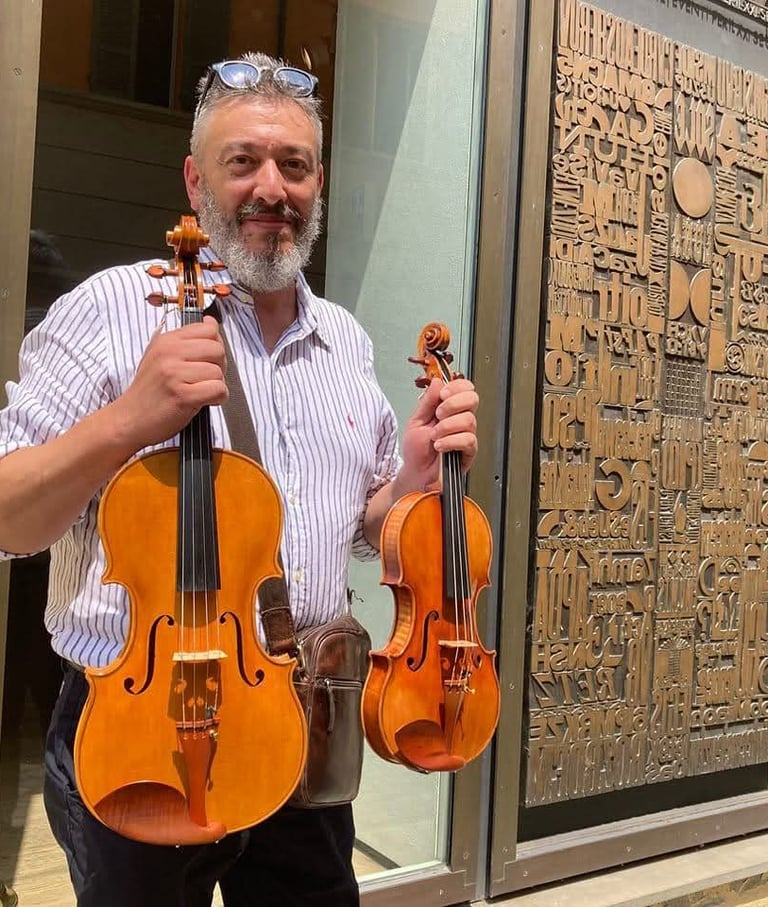
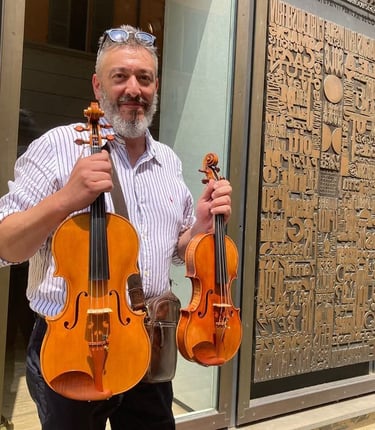
Guadagnini competition Piacenza
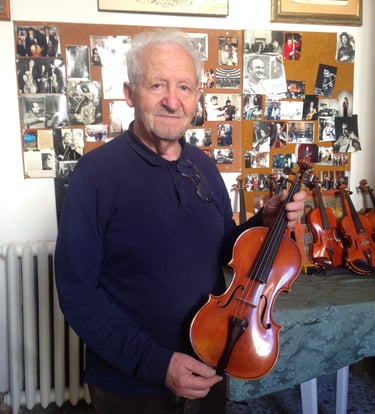
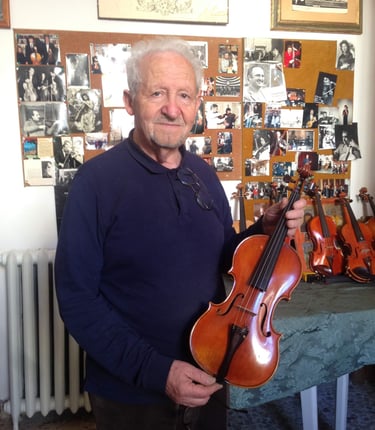
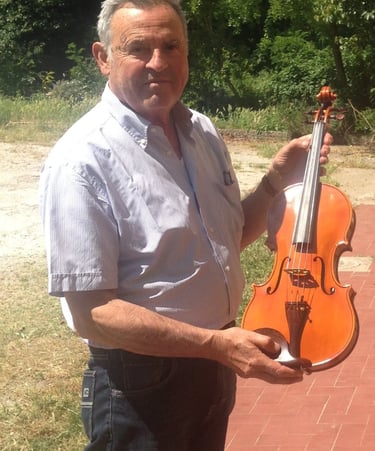
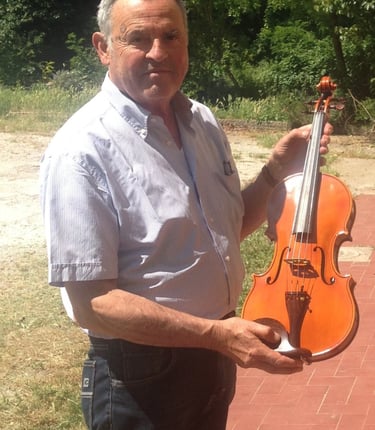
Il M° Roberto Ignesti
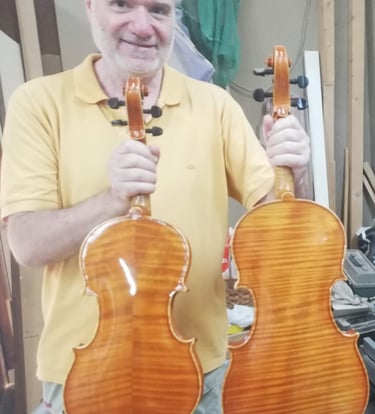
Il M° Enrico Giovannini
Il M° Carlo Vettori
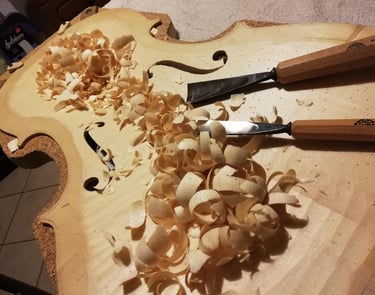
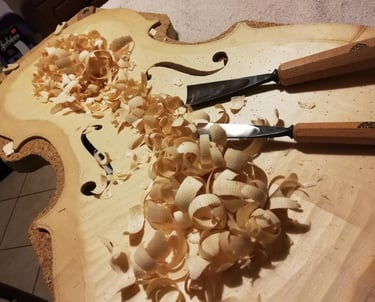
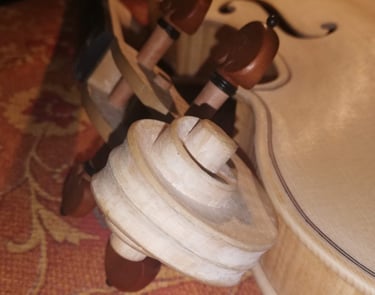
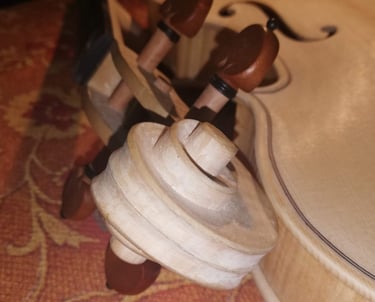
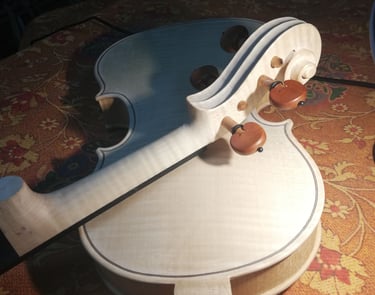
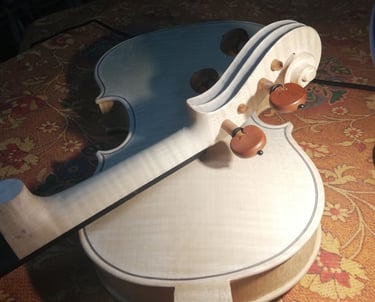
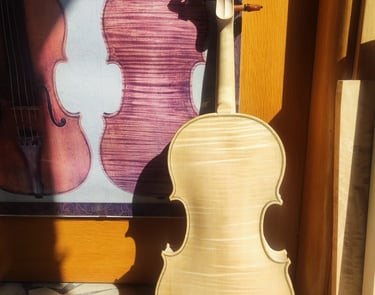
Some stages of the instrument’s construction
From wood to sound
Each instrument is handcrafted to capture the soul of music.
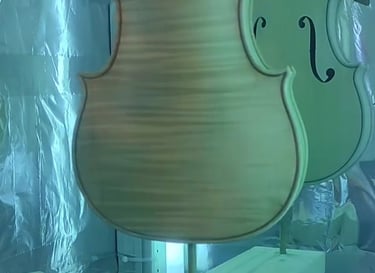
My instruments are handcrafted using the traditional Cremonese internal mould technique. I carefully select and use high-quality, naturally seasoned tonewoods: spruce from the Val di Fiemme and Balkan maple. I do not use chemical treatments or silicates intended to harden or artificially age the wood. While such methods may give an instrument an initial advantage, over time the sound often deteriorates, and the original golden-yellow flame of the maple frequently shifts toward a greenish hue.
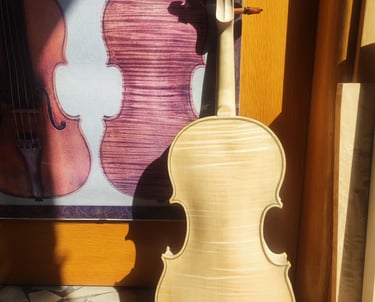
The Varnishing Process
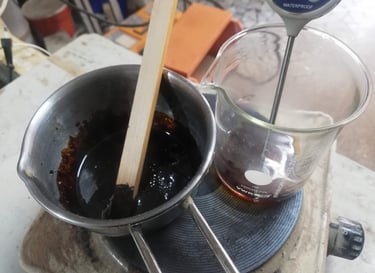
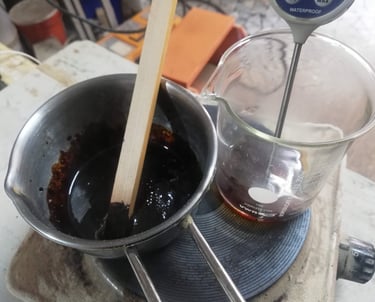
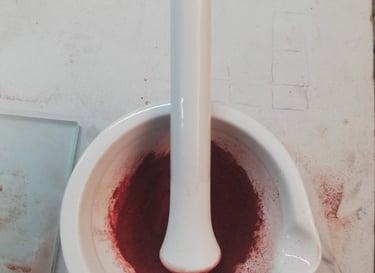
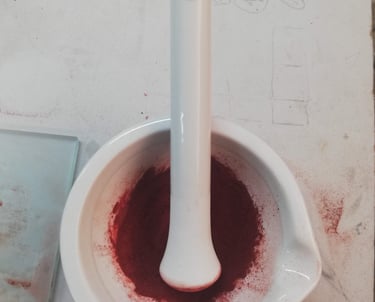
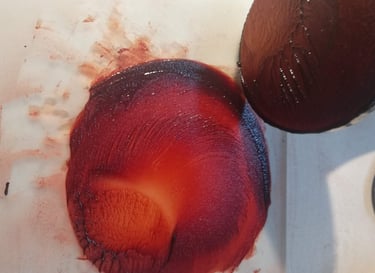
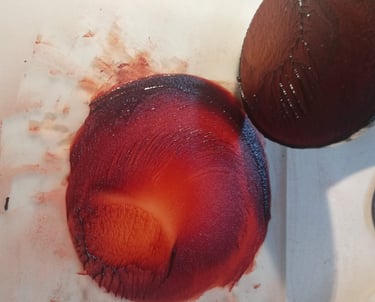
The varnish I use for my instruments is an oil and Baltic amber varnish that I produce myself. It naturally has a beautiful tobacco hue. All the colors I use are entirely natural: for red, brown, and their nuances, I use alizarin, which I personally produce starting from the harvesting of madder roots (Rubia tinctorum), through drying and subsequent processing.
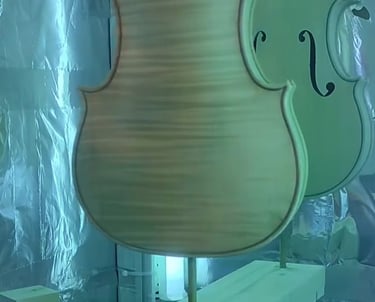
I prefer to varnish my instruments in late spring, as my varnish dries very quickly under ultraviolet light. When varnishing during winter, I use a custom-built UV light box equipped with four ultraviolet lamps, in which the instrument is placed on a rotating support. This “magic box” allows me to varnish violins, violas, and cellos even under unfavorable weather conditions and low temperatures.
The Perfect Finish
Each instrument is hand-varnished using natural varnishes and pigments.
Bow Rehairing
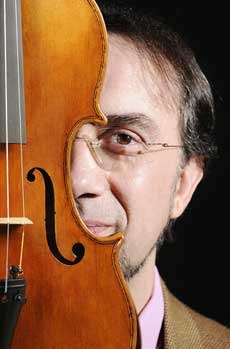
A Helping Hand: Antonio Bonacchi
I am deeply grateful to Antonio for teaching me an art that, until a few years ago, was completely unknown to me: bow rehairing. Antonio Bonacchi graduated from the “L. Cherubini” Conservatory in Florence in 1987 and worked as a violinist for nearly twenty years, at times also as concertmaster and soloist.
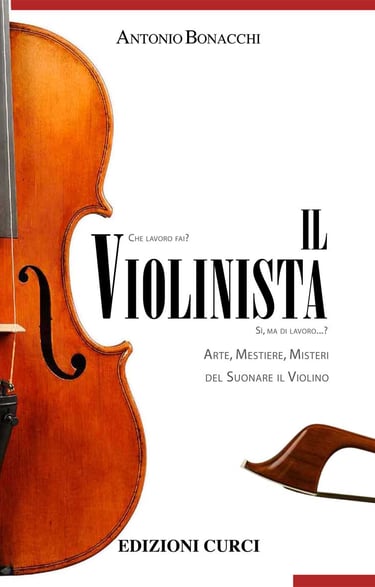
He has carried out impeccable rehairing work and delicate restorations that are still in use today. Antonio Bonacchi is the inventor of the Iojo cello endpin stopper and the author of the book “Che lavoro fai?… IL VIOLINISTA! Sì, ma di lavoro?” (Edizioni Curci). He is currently the owner of the shop musicherie.com.
Fortunately for me, he generously passed on his bow rehairing technique, and thanks to his teachings I now offer professional rehairing services using various types of horsehair, as well as repairs and replacement of silver windings, replacement of natural leather grips, and minor repairs for violin, viola, cello, and double bass bows.